
The Ultimate Guide to Emergency Management Training: Everything Corporate Teams Need to Succeed in 2026
In today's rapidly evolving threat landscape, emergency management training isn't just a compliance checkbox: it's a critical investment in organizational resilience. As we move through 2026, corporate teams face unprecedented challenges from natural disasters, cyber incidents, supply chain disruptions, and complex hybrid emergencies that demand sophisticated response capabilities.
The good news? The emergency management training ecosystem has never been more robust or accessible. From federal certifications to specialized online courses, corporate teams now have multiple pathways to build the competencies they need to protect their people, operations, and bottom line.
Why Emergency Management Training Matters More Than Ever
Corporate leaders are increasingly recognizing that emergency preparedness directly impacts business continuity, regulatory compliance, and stakeholder confidence. A well-trained emergency management team can mean the difference between a controlled response and a chaotic situation that damages reputation and revenue.
Recent studies show that organizations with certified emergency management professionals recover faster from disruptions and experience fewer operational losses during crisis events. For corporate teams, this translates to reduced downtime, better decision-making under pressure, and enhanced coordination across departments during critical incidents.

Federal Training Programs: The Gold Standard
FEMA's National Disaster & Emergency Management University (NDEMU) remains the cornerstone of professional emergency management education. These programs offer nationally recognized certifications that validate expertise and provide standardized frameworks for emergency operations.
National Emergency Management Basic Academy serves as the entry point for newly appointed emergency managers with less than three years of experience. Running virtually from January 26-30, 2026, this intensive program covers fundamental systems, concepts, and contemporary emergency management practices. For corporate teams building their emergency management function from the ground up, this foundational training establishes common language and operating procedures.
Emergency Operations Center (EOC) Planning Skillsets takes a more advanced approach, targeting professionals who need practical skills to support EOC operations at any incident level. This virtual format program uses real-world tasks and products to simulate the decision-making environment corporate teams will encounter during actual emergencies.
The Homeland Security Exercise and Evaluation Program (HSEEP) running January 12-15, 2026, addresses a critical gap many organizations face: how to effectively plan, conduct, and evaluate emergency exercises. This certification is particularly valuable for corporate teams that need to demonstrate preparedness to regulators, insurers, or stakeholders through realistic testing scenarios.

Regional Conferences: Networking Meets Professional Development
While federal programs provide standardized training, regional conferences offer specialized knowledge and invaluable networking opportunities with practitioners facing similar challenges.
The 2026 Emergency Management Summit & Training Sessions (March 31-April 3, Jekyll Island, Georgia) brings together professionals from across the Southeast for intensive training courses and peer-to-peer learning. These regional events often feature case studies from recent incidents, allowing corporate teams to learn from real-world responses and avoid common pitfalls.
The 2026 NJEPA Conference in Atlantic City (April 2026) emphasizes breakout sessions designed to strengthen preparedness across different organizational contexts. For corporate teams, these sessions provide exposure to innovative approaches and emerging best practices that may not yet be codified in formal training programs.
The 19th Annual EMAT Leadership Symposium (March 8-11, Hilton College Station, Texas) specifically targets leadership development: a critical component often overlooked in technical emergency management training. Corporate executives and emergency management directors gain insights into strategic decision-making, stakeholder communication, and organizational culture building.
Online Courses: Flexibility for Busy Corporate Schedules
Corporate teams often struggle to release employees for extended in-person training. Online courses through platforms like Coursera provide flexible, skills-based learning that professionals can complete around operational responsibilities.
Disaster, Crisis, and Emergency Preparedness Communication from State University of New York addresses one of the most challenging aspects of crisis response: communicating effectively under pressure with internal teams, external stakeholders, and media. Strong communication skills can prevent misinformation, maintain stakeholder confidence, and coordinate complex response activities.
Risk Management and Incident Response from Johns Hopkins University takes a systematic approach to identifying vulnerabilities and developing response protocols. This course is particularly valuable for corporate risk managers who need to integrate emergency management into broader enterprise risk frameworks.
High Stakes Leadership: Leading in Times of Crisis from University of Michigan focuses on the leadership competencies required when normal decision-making processes break down. Corporate leaders learn to make rapid decisions with incomplete information, maintain team cohesion under stress, and adapt strategies as situations evolve.

Psychological First Aid from Johns Hopkins University provides critical skills for supporting employees and colleagues affected by traumatic incidents. This human-centered training recognizes that organizational recovery depends on individual well-being and provides practical tools for providing immediate psychological support.
Academic Programs: Building Long-Term Capability
For organizations committed to building sophisticated emergency management capabilities, academic credentials provide deep theoretical knowledge and advanced analytical skills.
San Antonio College's Associate Degree in Emergency Management, available fully online, offers a structured curriculum covering all aspects of emergency management from hazard analysis through recovery operations. This credential is particularly appropriate for professionals transitioning into emergency management roles or organizations establishing formal emergency management departments.
Academic programs also provide research access and exposure to emerging theories that can inform corporate strategy. As emergency management evolves to address climate change, cyber threats, and complex interdependencies, academic training ensures corporate teams stay ahead of emerging challenges.
Choosing the Right Training for Your Corporate Team
With multiple training options available, corporate teams should consider several factors when building their emergency management training strategy:
Experience Level: Entry-level team members benefit from foundational programs like FEMA's Basic Academy, while experienced professionals should pursue advanced certifications and specialized courses.
Organizational Context: Different industries face different threat profiles. Manufacturing facilities need training in hazardous materials incidents, while financial services companies prioritize cyber incidents and data breaches. Choose training that aligns with your specific risk landscape.
Format and Schedule: Balance training quality with operational constraints. Virtual programs offer flexibility, while in-person conferences provide networking value. A blended approach often works best for corporate teams.
Certification Requirements: Some industries or regulatory frameworks require specific certifications. Verify compliance requirements before selecting training programs.
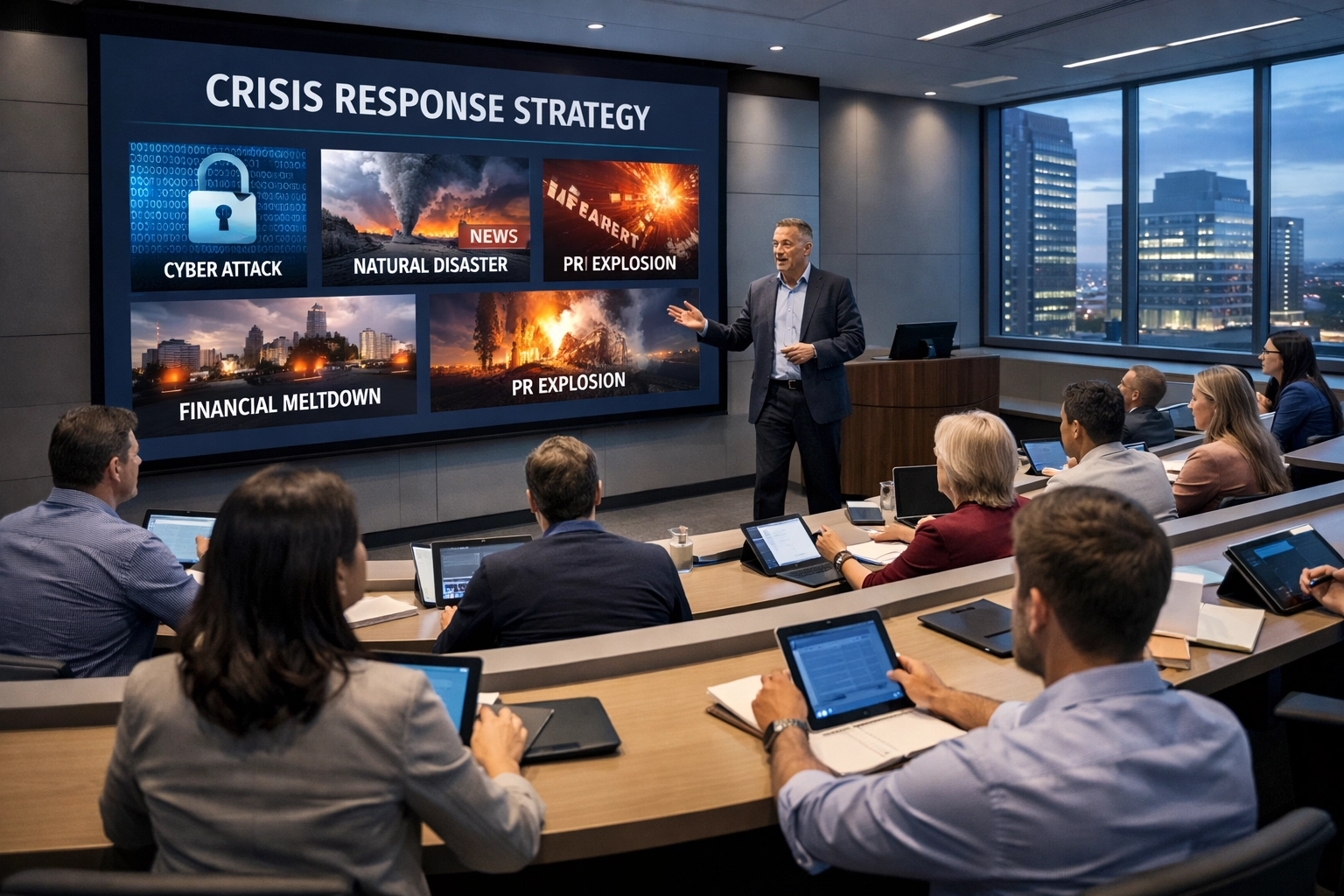
Building a Training Culture
Effective emergency management training extends beyond individual certifications. Corporate teams should develop ongoing training cultures that include:
Regular tabletop exercises testing plans and procedures
After-action reviews following both exercises and real incidents
Cross-training to ensure depth and redundancy in critical roles
Integration of emergency management principles into broader organizational training
Training investments pay dividends when incidents occur, but they also improve everyday operations by fostering risk awareness, enhancing communication, and building collaborative relationships across departments.
Taking the Next Steps
The emergency management training landscape in 2026 offers unprecedented opportunities for corporate teams to build world-class capabilities. Start by assessing your current competencies and identifying gaps. Prioritize foundational training for new team members while pursuing advanced certifications for experienced professionals.
Consider establishing partnerships with training providers for ongoing development and stay connected with professional associations that provide continuing education opportunities. Learn more about how Alpha Research Group can support your emergency management training needs and help your organization build the resilience capabilities required to thrive in an uncertain world.
Emergency management training isn't a destination: it's an ongoing journey of professional development, organizational learning, and continuous improvement. By investing strategically in training today, corporate teams position themselves to respond effectively when it matters most.
Comments