
Emergency Management Training 101: A Beginner's Guide to Mastering Crisis Response
- rynelemardis
- Feb 18
- 5 min read
Whether you're a corporate safety officer looking to expand your skillset, a recent graduate interested in public service, or a professional pivoting into emergency management, understanding the fundamentals of crisis response training is your first step toward making a real difference when disasters strike.
Emergency management isn't just about responding to hurricanes and wildfires: it's about building resilient organizations and communities that can withstand, respond to, and recover from any crisis. This guide will walk you through everything you need to know to start your journey in this critical field.
Why Emergency Management Training Matters More Than Ever
The landscape of threats facing organizations and communities has never been more complex. From cyber attacks that can cripple infrastructure to natural disasters intensified by climate change, the need for trained emergency management professionals continues to grow.
According to recent industry data, organizations with formally trained emergency managers experience 40% faster recovery times following critical incidents. That's not just a statistic: it's the difference between a business surviving a crisis or closing its doors permanently.
Emergency management training provides you with a systematic approach to identifying risks, developing response protocols, and leading teams through high-stress situations. These skills translate across sectors, from corporate environments to healthcare facilities, universities, and government agencies.

Understanding the Five Core Phases of Emergency Management
Before diving into specific training programs, it's crucial to understand the framework that underpins all emergency management activities. The field operates across five interconnected phases:
Prevention focuses on eliminating or reducing the probability of disasters occurring. This includes activities like enforcing building codes, conducting risk assessments, and implementing security measures.
Mitigation involves reducing the severity of impacts when disasters do occur. Think of installing flood barriers, creating redundant IT systems, or developing continuity plans.
Preparedness encompasses all the planning, training, and resource allocation that happens before an emergency. This phase includes developing emergency operations plans, conducting drills, and establishing communication systems.
Response is the immediate action taken during or directly after a crisis to save lives, protect property, and meet basic human needs. This is often what people picture when they think of emergency management: but it's just one piece of the puzzle.
Recovery involves both short-term and long-term efforts to restore normal operations and rebuild stronger than before. This phase often receives less attention but is critical for organizational and community resilience.
Effective emergency managers must be fluent in all five phases, understanding how actions in one phase impact outcomes in others.
FEMA's National Emergency Management Basic Academy: The Gold Standard
For those serious about building a career in emergency management, FEMA's National Emergency Management Basic Academy (NEMBA) represents the most recognized foundational training program in the United States.
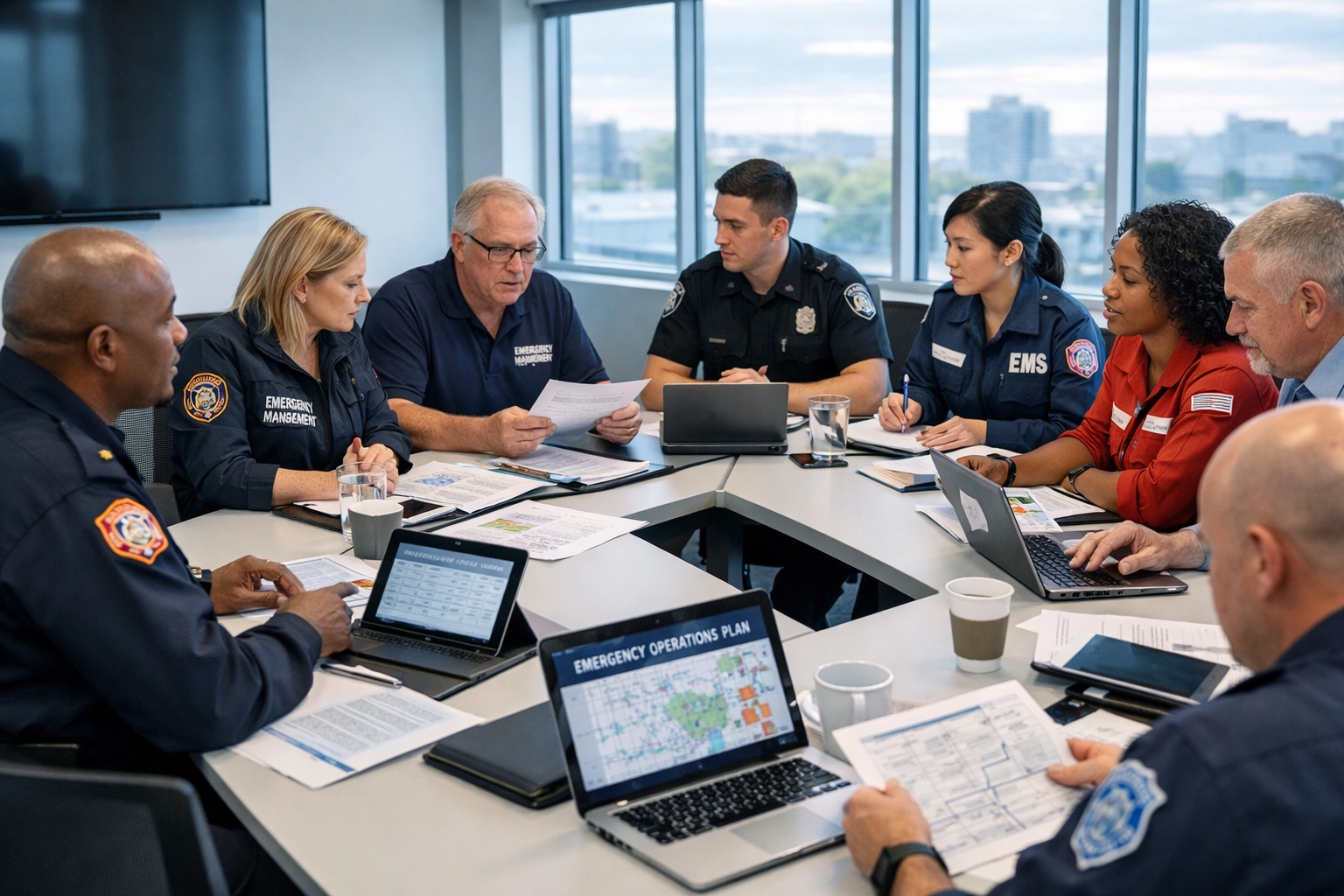
Designed specifically for newly appointed emergency managers with less than three years of experience, NEMBA offers a comprehensive introduction to the profession. The program welcomes participants from state, local, tribal, and federal agencies, as well as nonprofits, private sector organizations, and educational institutions.
The Basic Academy consists of five classroom courses delivered over three intensive weeks (120 hours total). Before even arriving for the in-person training, students must complete 11 prerequisite online courses through FEMA's Emergency Management Institute. These prerequisites cover essential topics including incident management, decision-making, communications, volunteer management, and the National Response Framework.
The recommended learning sequence follows a logical progression:
L0101 – Foundations of Emergency Management (5 days) introduces students to emergency management as a profession, covering all five phases and the critical "Whole Community" approach that emphasizes inclusive planning and response.
L0102 – Fundamentals of Threats and Hazards (3 days) dives into the scientific principles underlying various hazards, from natural disasters to technological and human-caused events.
L0103 – Planning (2 days) teaches the discipline and skills necessary for developing comprehensive emergency operations plans and managing special events.
L0105 – Public Information and Warning (3 days) covers modern alert systems and emergency communications, including hands-on training with the Integrated Public Alert and Warning System (IPAWS).
L0146 – Homeland Security Exercise Evaluation Program (2 days) focuses on designing and evaluating training exercises that test and improve emergency preparedness.
The academy combines instructor presentations with hands-on activities, exercises, team projects, and real-world case studies. This practical approach ensures that students leave with skills they can immediately apply in their roles.

Essential Skills Every Emergency Manager Needs
Beyond formal coursework, successful emergency managers develop a diverse skillset that combines technical knowledge with soft skills. Here are the core competencies you should focus on building:
Risk Assessment and Analysis – The ability to identify potential threats, evaluate their likelihood and potential impact, and prioritize preparedness efforts accordingly.
Strategic Planning – Developing comprehensive plans that account for multiple scenarios, resource constraints, and stakeholder needs while remaining flexible enough to adapt during actual emergencies.
Communication Under Pressure – Clearly conveying critical information to diverse audiences during high-stress situations, from executive leadership to frontline responders to affected communities.
Interagency Coordination – Building relationships and facilitating collaboration across multiple organizations, jurisdictions, and sectors that must work together during emergencies.
Resource Management – Efficiently allocating limited resources (personnel, equipment, funds) to maximize impact during preparation and response phases.
Leadership and Decision-Making – Making sound judgments with incomplete information while maintaining team morale and public confidence.
These skills develop over time through education, practical experience, and continuous learning. Many successful emergency managers complement formal training with professional certifications, tabletop exercises, and participation in real-world incidents.
Beyond FEMA: Alternative Training Paths
While NEMBA provides exceptional foundational training, it's not the only path into emergency management. Several alternatives offer flexibility for working professionals or those in specialized sectors:
University Degree Programs – Numerous colleges and universities now offer undergraduate and graduate degrees in emergency management, homeland security, or disaster science. These programs provide deeper theoretical knowledge and research opportunities.
Professional Certifications – Organizations like the International Association of Emergency Managers (IAEM) offer the Certified Emergency Manager (CEM) credential, which validates expertise through education, experience, and examination.
Industry-Specific Training – Healthcare facilities, educational institutions, and corporate environments often require specialized emergency management knowledge. Organizations like Alpha Research Group offer tailored training programs that address sector-specific challenges and regulatory requirements.
Online Courses and Webinars – For those balancing training with work and personal commitments, numerous online platforms offer flexible learning options covering everything from basic concepts to advanced crisis management strategies.
The best approach often combines multiple training paths, creating a customized learning journey that aligns with your career goals and organizational needs.

Building Your Emergency Management Career
Starting a career in emergency management requires both education and practical experience. Here's a realistic roadmap for breaking into the field:
Start with foundational knowledge. Complete FEMA's free independent study courses (the NEMBA prerequisites are available to everyone). These provide baseline knowledge and demonstrate commitment to potential employers.
Gain practical experience. Volunteer with local emergency services, join your organization's safety committee, or participate in community disaster preparedness initiatives. Real-world exposure is invaluable.
Network actively. Attend professional conferences, join emergency management associations, and connect with practitioners in your area. Many positions are filled through professional networks before being publicly advertised.
Pursue formal training. Once you've established a foundation, invest in comprehensive training like NEMBA or university coursework. Your employer may even sponsor your education.
Specialize strategically. As you gain experience, develop expertise in specific areas like cybersecurity and disaster preparedness, critical incident stress management, or crisis communications. Specialists are increasingly valuable as threats become more complex.
Maintain continuous learning. Emergency management evolves constantly with new threats, technologies, and best practices. Commit to lifelong learning through continuing education, exercises, and staying current with industry publications.
Taking the Next Step
Emergency management training isn't just about preparing for worst-case scenarios: it's about building resilient organizations and communities that can thrive despite uncertainty. Whether you're launching a new career or enhancing your current role, the investment in quality training pays dividends in both professional development and real-world impact.
The field needs dedicated professionals who can think critically, lead effectively, and remain calm when others panic. With the right training and commitment, you can become one of those professionals.
Ready to explore training options tailored to your organization's specific needs? Connect with our team to discuss how comprehensive emergency management training can strengthen your crisis response capabilities.
Comments